
Power plants often use generators as backup power sources to cope with power outages in the grid, failures of power supply equipment, and equipment maintenance. When a power outage occurs, the generator should automatically start within a few seconds to supply power to the feeder cabinet and electrical equipment, and then disconnect the main switch connected to the grid. When the grid power returns, in order to switch to grid power without causing a power outage during the conversion process, the generator must operate in parallel with the grid, and after successful grid connection, immediately disconnect from the grid. Parallel operation is a very important operation. Non-synchronous parallel connection of the generator will generate a large impact current, not only endangering the safety of the generator itself, but also causing fluctuations in the grid and disrupting stability. Therefore, it is required that the device and control and protection devices be complete and reliable.
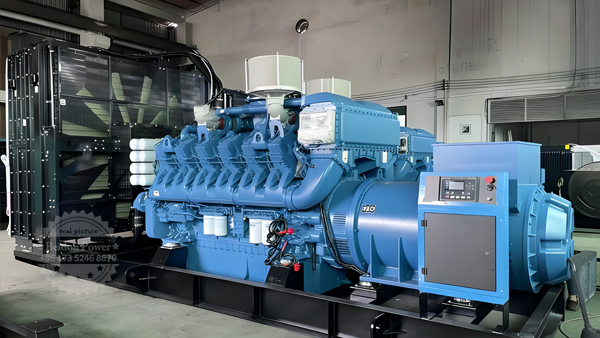
1. Parallel operation system
In order for the generator to be able to operate in parallel, the following conditions must be met:
① The phase sequence of the power supply generated by the generator is the same as that of the grid busbar. Otherwise, not only will the generator not be able to enter synchronization, but a large oscillation current will also be generated, causing the generator winding to bear excessive electric force, resulting in coil deformation and insulation short circuit.
② The effective value of the voltage of the generator is equal to or close to that of the grid busbar (voltage difference < 10), otherwise, due to the potential difference, internal reactive current circulation will occur, generating a large electromagnetic impact force.
③ The frequency of the generator should be basically equal to the frequency of the power system’s power source (frequency difference cannot exceed 0.5 – 1 Hz), otherwise, due to the active component of the oscillation current and oscillation voltage on the generator shaft, mechanical vibration will occur, causing damage to the generator, and affecting the stability of the grid.
④ The voltage phase of the generator is equal to that of the power system’s voltage (phase difference < 10°), otherwise, there will be a reactive and active current impact, causing the generator to burn out.
⑤ The waveforms are the same, and the generator and the grid are both sinusoidal waveforms.
When the generator operates in parallel with the grid, since the capacity of the grid is much greater than that of the generator, the changes in the working state of the generator will not affect the voltage and frequency of the grid. Therefore, when the generator is connected to the grid, it can be considered that the voltage and frequency of the grid are constant. The generator to be connected is adjusted in terms of output voltage by increasing or decreasing the excitation current, and the speed of the gas turbine engine is adjusted to adjust the frequency. The instantaneous speed is adjusted to meet the phase difference, and at the moment when the parallel conditions are basically met, the main circuit breaker of the generator is closed to put the generator into the system. This is the process of generator parallel operation.
To visually determine whether the parallel conditions are met, the screen of the generator is equipped with a voltage difference meter, two sets of indicator lights, and a meter for inspection and monitoring. At the same time, an automatic synchronous parallel device is also provided. Through the voltage difference meter, the voltage difference between the terminal voltage of the generator to be connected and the grid busbar can be measured; through the dark and bright states of the indicator lights, the frequency and phase sequence of the generator and the grid busbar side can be checked; when the frequency of the generator to be connected is higher than the operating frequency of the grid, the pointer of the meter rotates clockwise rapidly; conversely, it rotates counterclockwise. The larger the voltage difference, the faster the pointer of the meter rotates, and when the voltage difference decreases, the pointer rotates more slowly. When the voltage difference between the two sides reduces to a certain extent, the pointer position and the angle between the point are the phase difference between the voltages of the two sides. When the above instruments indicate that the parallel conditions are met, manual synchronous parallel operation can be carried out.
2. Split protection system
In order to ensure the reliable and stable operation of the power generation unit after being connected to the grid, this unit is equipped with a complete and safe protection device. Once the unit has the following faults, it will automatically trip, disconnect from the grid, and automatically shut down.
① Overload fault: If the output power of the power generation unit exceeds 10% of the rated power during operation, the generator will easily be damaged due to overload. Load sensors are installed on site. When there is a severe overload, it will automatically shut down. ② Over-speed fault: If the generator set operates at a speed exceeding the rated speed, it will cause the power frequency to differ from the grid frequency. Therefore, a speed relay was designed. When the generator’s operating speed is greater than 2 times the rated speed, it is regarded as a fault and the generator will automatically shut down.
③ Oil pressure fault: The normal operation of the lubrication system of the generator set is reflected by its oil pressure. If the oil pressure is abnormal, it can be regarded as the generator set being in an abnormal operating state. In severe cases, the relay can automatically shut down the generator.
④ Water temperature and water level faults: The circulating water inside the generator is used for the cooling of the generator set. When there is no water, little water, or excessive water temperature inside the generator set, it indicates that the cooling system is not normal, and the generator set can be damaged. Now, water temperature and water level sensors have been installed, and they will automatically shut down the generator set when in an abnormal state.
⑤ Battery fault: The battery is used to provide self-excitation for the stator of the generator set. The quality of the excitation system directly affects the operation quality of the generator set. Therefore, a battery voltage relay was designed. When it fails, it will automatically shut down the generator set.
⑥ Power direction fault: When the generator set is operating normally, it outputs electrical energy to the grid. When it is not operating normally, the grid provides power to the generator set. At this time, the generator set becomes an electric motor and consumes electrical energy. Therefore, a power direction relay device was designed to make the generator set only provide power to the grid. Once the direction is reversed, it will disconnect from the grid and automatically shut down.
⑦ Emergency stop device: When the generator set encounters an emergency situation, the emergency stop button can be pressed to instantly disconnect the generator set from the grid and stop the operation of the generator set.
III. Generator’s Excitation System and Secondary Circuit
3.1 Excitation System
The excitation system is a core component of the AC synchronous generator. The quality of the excitation system directly affects the nature and operation quality of the synchronous generator. The synchronous generator installed in Chaozhou Datang Power Plant is a self-excited, constant voltage, brushless generator, equipped with a compound excitation excitation system. The excitation power of the generator is obtained from its internal components. This compound excitation excitation system has good dynamic performance. When sudden loading or unloading of the rated load is applied, the voltage transient is small, the transient process is small, the overload capacity can reach 2.5 times the rated current, and it can withstand 3 times the rated value of short-circuit current. Under the action of the A.V.R regulator, it can achieve high steady-state voltage regulation rate and other outstanding advantages.
3.2 Secondary Circuit
The secondary circuit of the generator is composed of different functional basic circuits, mainly including the generator voltage regulation circuit, the generator speed regulation circuit, the automatic synchronous parallel control circuit, the automatic parallel, manual parallel and disconnection control circuit, the measurement circuit, the generator auxiliary equipment control circuit, the generator output power limitation circuit, the reverse power control circuit, the DC 24V power supply and charging circuit, the engine start and stop circuit, and the relay protection circuit.
For more questions about the generator set, please call the Beidou Power team. More than ten years of professional production and sales of power generation equipment experience, more professional engineer team to serve you, choose Beidou power is to choose rest assured, welcome on-site factory inspection.
Post time: Feb-09-2026