
I. Function of Capacitor Compensation Cabinet
It is used to compensate for the reactive current of the generator, reduce the working load of the generator, increase the available capacity of the generator, and reduce the electricity consumption of the factory, save industrial electricity, and improve the power supply quality and capacity of power supply equipment.
II. Working Principle of Capacitor Cabinet
Except for resistive loads, most electrical equipment is of inductive load (such as fluorescent lamps, transformers, motors, etc.). These inductive loads cause the phase of the power supply voltage to change (that is, the current lags behind the voltage), resulting in large voltage fluctuations, increased reactive power, and waste of a large amount of electrical energy. When the power factor is too low, the output current of the power supply source becomes too large, causing an overload phenomenon. The computer capacitor control system in the capacitor compensation cabinet can solve the above problems. It can automatically set according to the changes in the load. The number of capacitor groups is put into use to perform current compensation, thereby reducing a large amount of reactive current, reducing the power loss of the line to a low level, and providing a high-quality power source.
III. Capacitor Compensation Technology
In industrial production, widely used AC asynchronous motors, welding machines, electromagnetic iron heating equipment, and other point equipment are all inductive loads. During the energy conversion process of these inductive loads, the voltage applied to them leads the current by an angle. The cosine of this angle is called the power factor, and this current (the current flowing through the coil with both resistance and inductance) can be decomposed into a reactive component with the same phase as the voltage and a lagging component 90 degrees behind the voltage. This reactive component is called inductive reactive current. The corresponding power is called inductive reactive power. When the power factor is very low, that is, when the reactive power is very large, the following hazards will occur:
The increase in line current leads to an increase in line loss and waste of electricity. Due to the increase in line current, the voltage will decrease, affecting the use of equipment. For transformers, the larger the reactive power, the higher the electricity charge per kilowatt-hour paid by the power supply bureau. When the power factor is lower than 0.7, the power supply bureau may refuse to supply electricity.
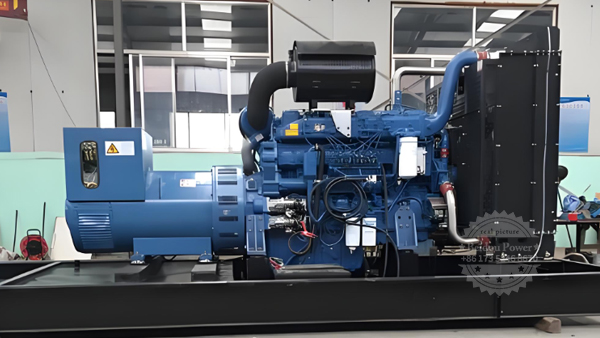
For generators, for example, a 310KW generator.
The rated power of the 310KW generator is 280KW, and the rated current is 530A. When the load power factor is 0.6
Power = 380 x 530 x 1.732 x 0.6 = 210KW
From this, it can be seen that when the load is 530A, the diesel engine part of the unit is very easy, while the electric ball is extremely burdened. If the load increases further, another generator needs to be started. By adding a capacitor compensation cabinet, the power factor can be increased to 0.96, and the same 210KW load.
Current = 210000 / (380 x 1.732 x 0.96) = 332A
After compensation, the current is reduced by nearly 200A, and both the diesel engine and the electric ball parts are quite easy to bear, and even if the load increases further, they can still be borne without starting another generator. This can save a lot of diesel. It also allows other units to have a sufficient rest. From this, it can be seen that the economic benefits of capacitor compensation are considerable.
For more questions about the generator set, please call the Beidou Power team. More than ten years of professional production and sales of power generation equipment experience, more professional engineer team to serve you, choose Beidou power is to choose rest assured, welcome on-site factory inspection.
Post time: Mar-30-2026