
Emergency diesel generators are mainly deployed in critical facilities. In the event of an emergency or mains power outage, they instantly kick in to rapidly restore power supply and sustain electricity for a certain duration. Such power consumers are classified as Class I loads. For equipment, instruments and computer systems with stringent tolerances against power interruption, batteries or UPS systems shall be installed in addition to diesel generators.
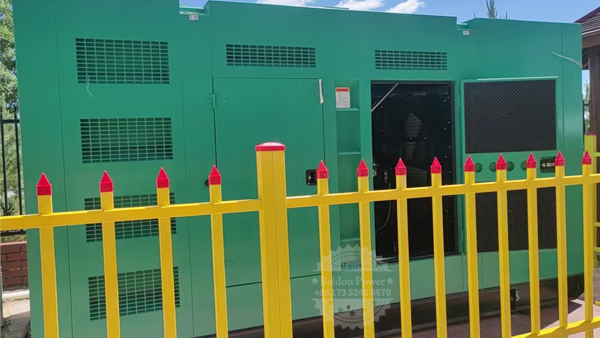
Emergency diesel generators feature two operational characteristics:
They serve emergency purposes only with a short continuous running duration, typically limited to several hours (≤12 hours).
They act as standby units. Normally, emergency generator sets remain shut down on standby. They will only start and supply critical loads once all main power sources fail completely. The units will automatically switch off immediately after the mains supply is restored to normal.
(1) Determination of Emergency Diesel Generator Capacity
The rated capacity of an emergency diesel generator set refers to its 12-hour rated capacity corrected for atmospheric conditions. Its capacity shall cover the total calculated critical load, and shall be verified against the requirement of starting the largest single rated motor among Class I loads. Three-phase AC synchronous generators with a rated output voltage of 400V are generally adopted for emergency service.
(2) Determination of the Number of Emergency Diesel Generator Sets
Where multiple generator sets are held as standby, a single emergency diesel generator set is the standard configuration. For enhanced reliability, two sets running in parallel may also be selected. The number of emergency generator sets shall generally not exceed three. If multiple units are specified, complete sets with identical model and capacity, similar voltage regulation and speed governing characteristics, and consistent fuel type shall be prioritized, to facilitate maintenance, servicing and shared spare parts.
When two emergency generator sets are installed, the automatic start-up system shall enable mutual backup between the two units. Upon delayed confirmation of mains power failure, an automatic start command is issued. If the first unit fails three consecutive automatic start attempts, an alarm signal shall be triggered and the second diesel generator shall start automatically.
(3) Selection Criteria for Emergency Diesel Generators
High-speed, turbocharged diesel generator sets with low fuel consumption of equivalent capacity are preferred for emergency applications. High-speed turbocharged diesel engines deliver higher single-unit capacity with a smaller footprint. Diesel engines equipped with electronic or hydraulic governors offer superior speed regulation performance. Synchronous generators fitted with brushless excitation or compound excitation devices are recommended for high operational reliability, low failure rates and simplified maintenance and inspection.
If Class I loads include large-capacity single air conditioners or motors, generator sets with third-harmonic excitation shall be selected. The complete unit shall be mounted on a shared base frame fitted with shock absorbers. Mufflers shall be installed at the exhaust outlets to mitigate noise impact on the surrounding environment.
(4) Control System for Emergency Diesel Generator Sets
The control system of emergency generator sets shall be equipped with rapid automatic start and automatic switch-in devices. Upon mains power failure, the emergency unit shall start automatically and restore power quickly. The permissible power interruption duration for Class I loads ranges from ten to several tens of seconds and shall be defined on a project-specific basis.
For critical projects suffering mains power loss, a 3–5 second confirmation delay shall be implemented first to avoid false triggers caused by momentary voltage drops, mains grid reclosure or automatic switch-in of other standby power sources, before a start command is sent to the emergency generator set.
A certain time lag is required from command issuance, unit cranking and speed ramp-up to full-load capacity. Most medium and large diesel engines require pre-lubrication and warm-up cycles to ensure oil pressure, oil temperature and cooling water temperature comply with the manufacturer’s technical specifications prior to emergency load application. Pre-lubrication and warm-up may be maintained continuously according to site requirements.
For scenarios such as military communications, major foreign receptions in large hotels, large-scale public night events in civic buildings, and critical surgical operations in hospitals, emergency units shall stay in pre-lubricated and warmed-up standby status at all times to enable instant start-up and minimize power outage duration.
After the emergency generator set is switched online, critical loads shall be applied in staged increments with timed intervals (where power supply requirements permit) to reduce mechanical and inrush current shocks from sudden load switching.
In accordance with national standards and military standards of China, the allowable initial load after successful automatic start of an automated generator set is specified as follows:
For units with a rated power of ≤250 kW: the initial applied load shall be no less than 50% of the rated capacity;
For units with a rated power of >250 kW: comply with the manufacturer’s technical specifications.
Where there are loose restrictions on transient voltage drop and transition performance, the sudden load switching (either load-on or load-off) shall generally not exceed 70% of the generator’s rated capacity.
For more questions about the generator set, please call the Beidou Power team. More than ten years of professional production and sales of power generation equipment experience, more professional engineer team to serve you, choose Beidou power is to choose rest assured, welcome on-site factory inspection.
Post time: Jun-15-2026