
A generator is usually composed of components such as the stator, rotor, end cover, frame and bearings.
The stator is made up of the frame, stator core, winding coils, and other structural components that fix these parts.
The rotor is composed of the rotor core (with magnetic扼, magnetic pole winding), slip ring (also known as copper ring, collector ring), fan, and rotor shaft, etc.
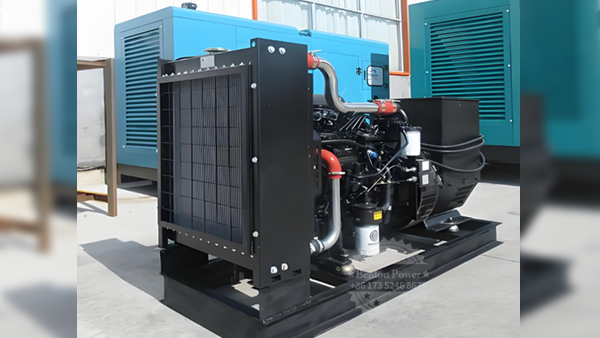
The stator and rotor of the generator are connected and assembled by bearings and end cover, allowing the rotor to rotate within the stator and perform the motion of cutting magnetic lines of force, thereby generating induced electromotive force, which is then led out through connection terminals and connected to the circuit to produce current.
An steam turbine generator is a generator that is matched with a steam turbine. To achieve higher efficiency, steam turbines are generally made at high speeds, usually 3000 revolutions per minute (frequency 50 Hz) or 3600 revolutions per minute (frequency 60 Hz). In nuclear power plants, the speed of the steam turbine is lower, but it is also above 1500 revolutions per minute. High-speed steam turbine generators, in order to reduce mechanical stress caused by centrifugal force and reduce wind friction, generally have a relatively small rotor diameter and a relatively long rotor length, that is, a slender rotor is adopted. Especially in large-capacity high-speed units above 3000 revolutions per minute, due to the strength of the material, the rotor diameter is strictly limited and generally cannot exceed 1.2 meters. The length of the rotor body is also limited by the critical speed. When the length of the body exceeds six times the diameter, the second critical speed of the rotor will approach the operating speed of the motor, and large vibrations may occur during operation. Therefore, the size of the rotor of large high-speed steam turbine generators is strictly limited. The rotor size of an 100,000 kilowatt air-cooled motor has reached the above limit size. To increase the capacity of the motor, only by increasing the electromagnetic load of the motor can it be achieved. Therefore, for steam turbines with a capacity of 5 to 100,000 kilowatts, hydrogen cooling or water cooling technologies with better cooling effects have been adopted. Since the 1970s, the rated capacity of steam turbine generators has reached 130 to 150 million kilowatts. Since 1986, significant breakthroughs have been made in the research of high critical temperature superconducting materials. Superconducting technology is expected to be applied in steam turbine generators, which will bring a new leap in the history of steam turbine generator development.
For more questions about the generator set, please call the Beidou Power team. More than ten years of professional production and sales of power generation equipment experience, more professional engineer team to serve you, choose Beidou power is to choose rest assured, welcome on-site factory inspection.
Post time: Mar-25-2026